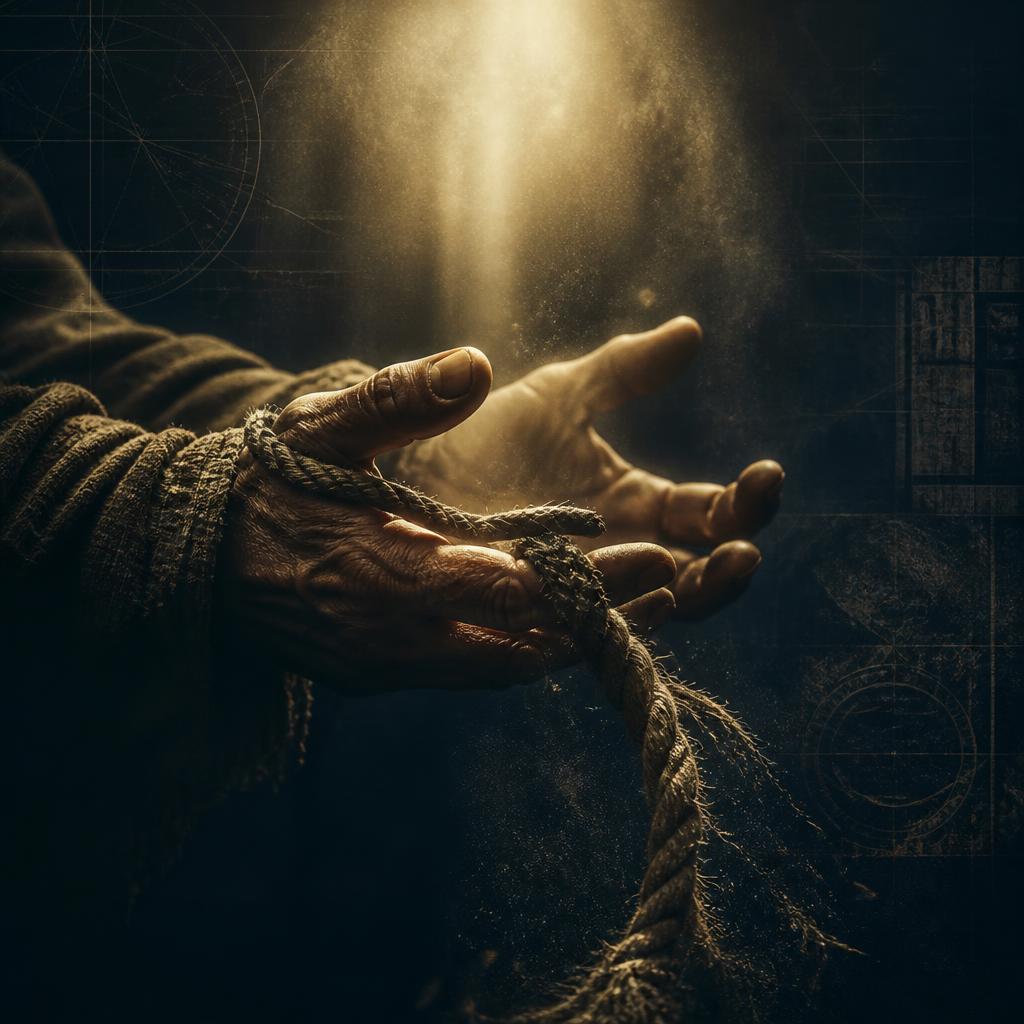
Fear Losing
Its Grip
When fear no longer governs, life begins to unfold differently.
◆ Listen to the Passage
Fear Losing Its Grip: Narrated
Part 1 of 5 · ≈ 5 min
Fear Is Not What You Think
0:00 / 0:00
a 10 Hz alpha field · loosens fear's grip on the nervous system
Fear Is Not What You Think
For most of my life, I thought fear was an emotion.
A feeling.
A response to danger.
But the more I have observed both myself and others, the less convinced I have become that this is what fear actually is.
I now wonder whether we have been asking the wrong question.
Most conversations about fear ask:
What causes fear?
Perhaps the more revealing question is:
What does fear produce?
That single shift changes everything.
Afraid and Fearful
Something curious happens when we pay attention to language.
If someone asks, “Why were you afraid?” the answer usually comes easily.
“Because I didn't know where I was going.” “Because I thought I was going to lose my job.” “Because I heard someone behind me.”
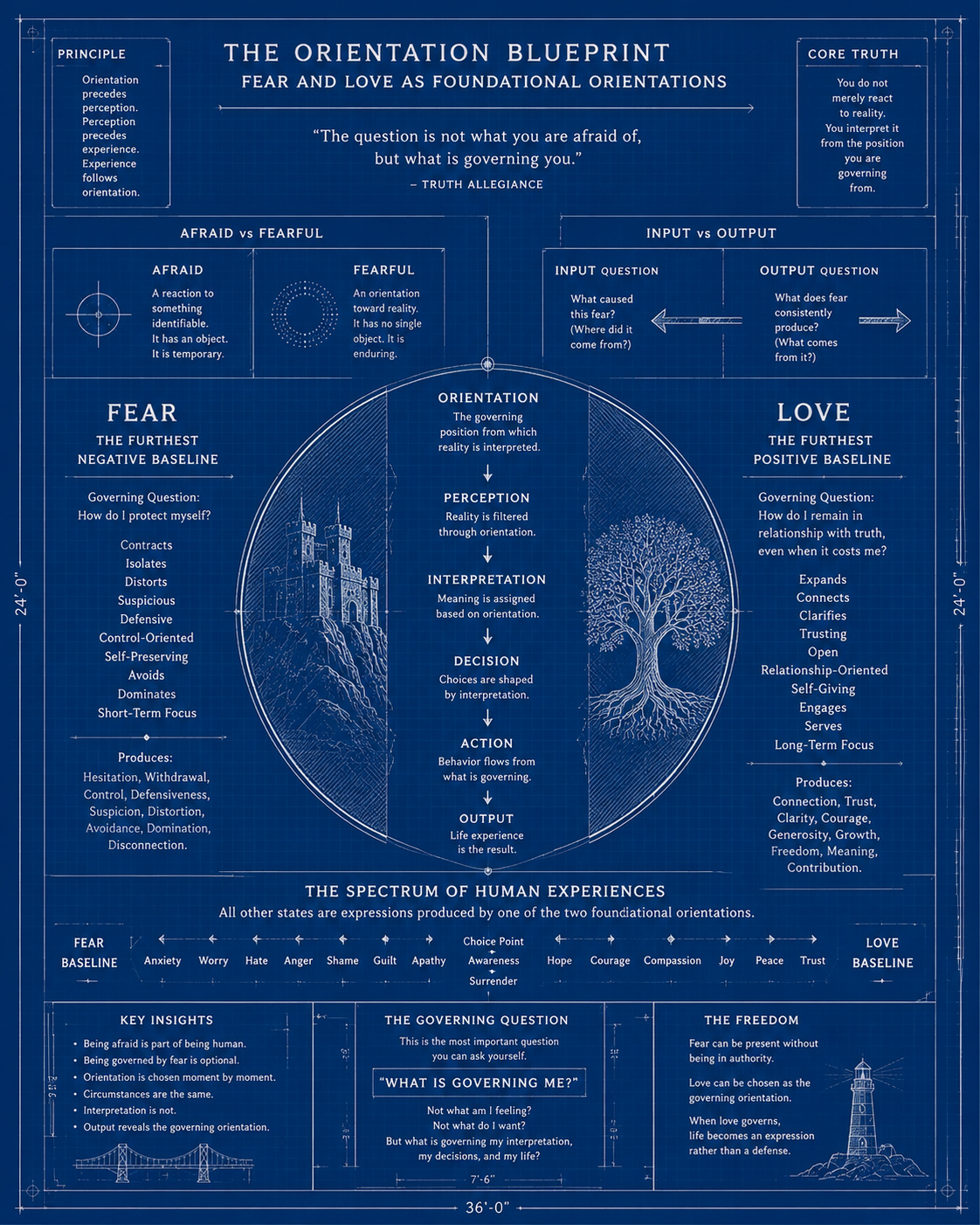
Being afraid almost always has an object. It is a reaction. It points toward something identifiable.
But ask a different question. “Why are you fearful?”
The answer becomes far more difficult. People often begin describing circumstances rather than explaining the fear itself.
“I'm fearful of the future.” “I'm fearful of what might happen.” “I'm fearful of failing.”
Notice what has happened. The conversation has shifted away from a momentary reaction and toward an enduring way of relating to reality.
Perhaps being afraid is something we experience.
Fearfulness is something from which we experience.
That distinction matters.
Fear Is Not About Input
For centuries we have investigated fear by tracing its origin.
What caused it? Who produced it? What trauma created it?
Those are important questions. But they may not be the deepest ones.
Perhaps fear is better understood not by its input but by its output.
What does fear consistently produce?
It produces hesitation. Withdrawal. Control. Defensiveness. Suspicion. Self-protection. Distortion. Avoidance. Domination.
The circumstances may differ. The outputs remain remarkably consistent.
If this is true, then fear functions less like a passing emotion and more like an orientation.
The Architecture of Orientation
An orientation is not simply something we feel. It is the position from which we interpret everything else.
It governs perception before perception becomes conscious. It shapes decisions before decisions are made. It influences relationships before words are spoken.
Two people can stand inside the same circumstance and produce completely different lives.
Not because reality changed. Because their governing orientation was different.
The circumstance was the same.
The architecture interpreting it was not.
Love at the Other End
If fear represents the furthest negative orientation, then love represents the furthest positive orientation.
Not because love always feels pleasant. Not because fear always feels unpleasant. But because they produce fundamentally different trajectories.
Fear continually asks, “How do I protect myself?”
Love continually asks, “How do I remain in relationship with truth, even when it costs me?”
Fear contracts. Love expands.
Fear isolates. Love connects.
Fear attempts to preserve the self.
Love is willing to surrender the self for something greater than itself.
They are not merely different emotions. They are different governing principles. Different baselines. Different architectures.
A Personal Observation
I began seeing this most clearly during one of the most painful seasons of my life.
After my father's death, I expected fear to become the interpreter of my grief.
Instead, something unexpected happened.
The grief remained. The tears remained. The love remained. But fear did not seem to be governing the experience.
This was not the absence of fear. Nor was it emotional suppression. There were moments when I felt afraid. But fear was no longer occupying the seat of authority.
Love was.
That single difference changed everything.
Grief became an expression of love rather than a collapse into fear.
I still cried. I still missed him. But I did not experience the world as though it had become unsafe.
The Governing Question
Perhaps the most important question we can ask ourselves is not, “Am I experiencing fear?”
Every human being will.
The better question is,
“What is governing me?”
Because being afraid is part of being human. Being governed by fear is something else entirely.
Likewise, love is not merely an emotion we occasionally experience. It is a way of standing in reality. A governing orientation from which life unfolds.
Perhaps this is why two people can live through identical circumstances and emerge profoundly different.
The difference is not what entered their lives. The difference is what their lives were governed by.
That, I believe, is where the deepest inquiry into fear begins.
✦ A Quiet Room
Sit With What You Just Read
Reading is not the end of the work. If anything here touched something in you, the next part belongs to you alone. Step into a quiet space and write, not for an audience, not for performance. Just to notice what is here.
Door I
Begin with a Question
"If fear were no longer in the seat of authority, what would I do next?"
Door II
Begin in Silence
A blank page. No prompt. Whatever surfaces.
Door III · Outward Passage
Enter MIRROR:RY
For those who want to work with what they have read: interactively. MIRROR:RY is a separate, private space where observation becomes practice.
mirrorry.com → /my-data
Your writing in this Quiet Room stays private on this device. If you are signed in, you may keep it in your account.
a 10 Hz alpha field · loosens fear's grip on the nervous system